We do not treat your weight as a question of willpower. We assess it medically and settle on an approach you can keep to.
Having worked in internal medicine and cardiology clinics, university hospitals and advanced medical centres, I saw again and again how deeply obesity sits behind the lifestyle-related conditions I was treating — high blood pressure, abnormal lipids, diabetes and fatty liver disease.
At the same time, patients tell us that weight is a difficult subject to raise within the framework of insured care.
We opened this clinic because we believe people need somewhere they can talk to a doctor easily, before the illness takes hold.
Weight-loss treatment is provided by specialists in cardiovascular medicine (high blood pressure, abnormal cholesterol, lifestyle-related diseases, and heart and blood vessel disease) and in general internal medicine.
Our doctor has worked in clinics specialising in internal medicine and cardiology, in university hospitals and in advanced medical centres, and continues clinical training every day.
Plenty of people have been told that the reason for their weight is weak willpower, or not trying hard enough. In recent years, however, thinking about obesity has changed considerably. One of the central themes in that change is weight stigma — prejudice and discrimination.
Between 19 and 42 per cent of people with obesity are reported to have experienced discrimination because of their weight, and such prejudice is widespread not only in society at large but among healthcare professionals as well.
The view that obesity is the deserved result of a weak will is scientifically wrong. Body weight is shaped to a great extent by biological forces — genetic factors (40 to 70 per cent) and the mechanisms by which the brain defends a set level of body fat. Obesity is also a condition our modern environment has produced. As long as we live in that environment, changing habits built up over many years is not a simple matter. Eating is bound up with each person’s state of mind and circumstances. When someone with obesity says they cannot control it, that can never be put down to a lack of effort alone. Sleep, working hours, the food environment around you — a great many conditions you never chose are layered on top of one another.
Prejudice is also counterproductive. More people avoid or delay seeing a doctor for fear of being judged, which leads to anxiety and depression, further overeating and avoidance of exercise — a vicious circle that has been shown to worsen obesity itself. We need to move past the idea that obesity is the individual’s own fault, and place it alongside other chronic conditions as something to be diagnosed and treated on the evidence, so that prejudice gives way to proper medical care.
Clinical obesity — a new way of thinking that separates “weighing a lot” from “being ill”, and identifies who genuinely needs treatment
BMI, the usual yardstick for obesity, has the advantage that a set of scales is all you need, but it cannot distinguish muscle from fat. Some people with a high BMI are healthy; some with a low BMI are not. BMI is a screening guide, and not something that diagnoses illness on its own.[1][3]
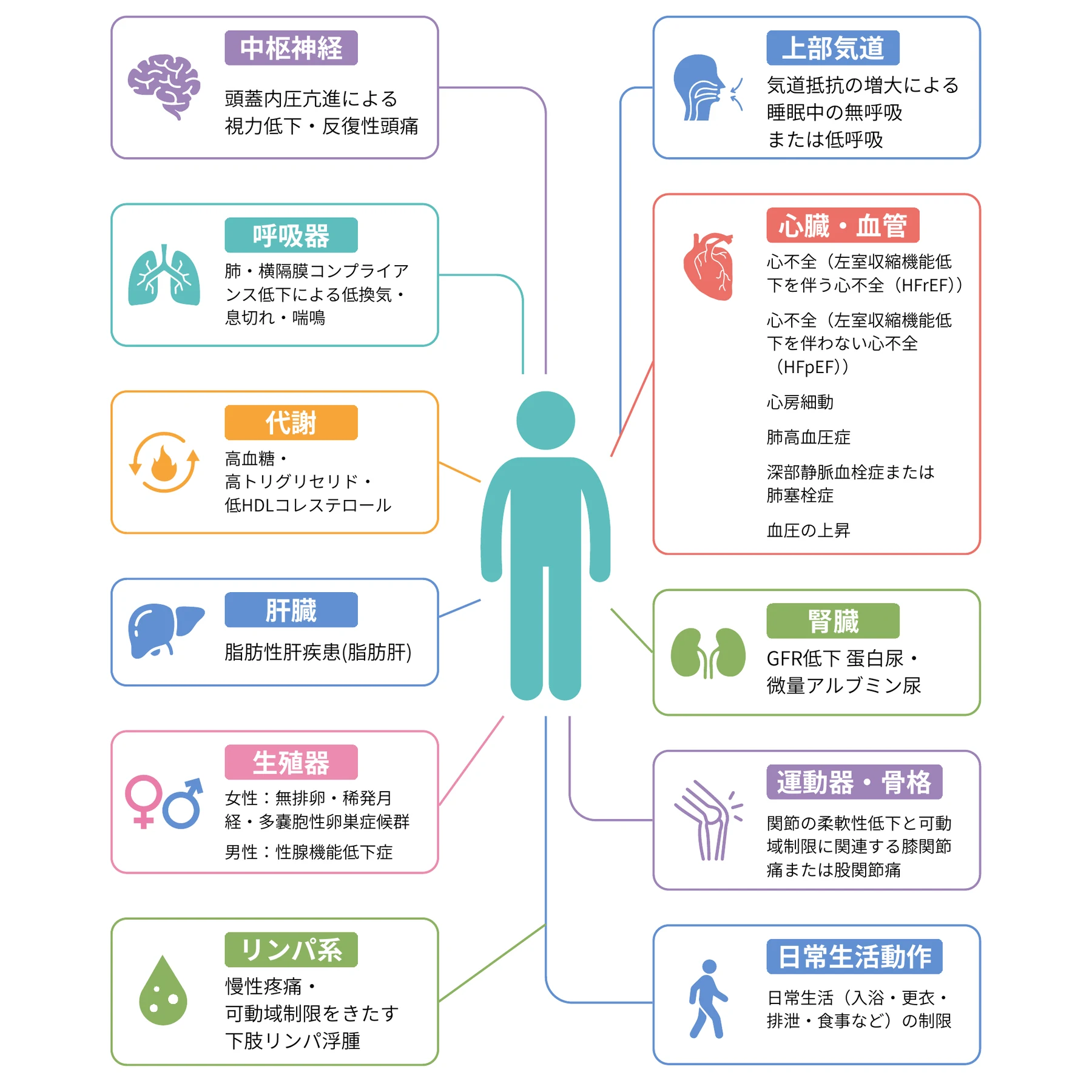
The paper behind this[3] rethinks obesity as a chronic illness in which excess accumulation of fat impairs the working of organs and tissues. Excess fat is first confirmed by waist circumference[6][7] or body composition measurement, and then the question is whether organ function is reduced or daily activities are restricted. The aim is to avoid treating people who simply weigh more as patients, while making sure care reaches those who genuinely need it.
GLP-1 and GIP/GLP-1 receptor agonists act on the brain and the digestive tract to curb appetite. Used by people with obesity, they can therefore be expected to reduce body fat and bring weight down. They are approved as treatments for obesity in the United States, in Europe and across Asia as well, although the approval status differs from country to country.
Recent medicines for obesity are drawing attention not only for reducing weight but as treatment aimed at the illnesses obesity brings and the health risks that lie ahead.
Reference: Japan Society for the Study of Obesity
Results vary from person to person. Most people begin to notice a change after about a month and feel the effect by the third month, but treatment does not always produce the result you hope for, and for some people it does not work at all.
When you stop the medicine, weight can come back — a rebound. Diet and exercise are what keep that rebound as small as possible. Our aim is for treatment here to be the thing that makes losing weight through diet and exercise something you can take on more readily.
Every medicine, GLP-1 products included, rests on a balance between how well it works and how safe it is. There is a limit to how far side effects can be predicted, and even with the greatest care and the best medical knowledge available today, they cannot be prevented entirely.
The most common are digestive symptoms: discomfort in the upper abdomen, constipation, nausea and diarrhoea. More rarely, serious problems such as acute pancreatitis, cholecystitis, cholangitis, hypoglycaemia, ileus (bowel obstruction) or an allergic reaction can occur. In particular, if you have severe, persistent abdominal pain with vomiting, contact us rather than waiting to see how it goes.
GLP-1 and GIP/GLP-1 receptor agonists curb appetite by acting on the stomach, but they also slow down digestion, which can cause discomfort in the upper abdomen, constipation, nausea or diarrhoea. These are most likely when you first start and when the dose is increased, so take care at those points. They usually settle with time, but do tell us if you are not feeling well.
If you feel nauseous, the following may help.
This varies from person to person, but bruising from the needle, or swelling, pain, redness, itching, tightness, warmth or a firm lump at the injection site can occur. If it bothers you, mention it to the doctor or a member of staff at your next visit.
Hypoglycaemia
This is when blood sugar falls below the normal range. If you are eating as usual, hypoglycaemia is rare with a GLP-1 injection on its own. Even so, if you notice any of the symptoms below, take sugar straight away, then contact us promptly for advice.
Symptoms of hypoglycaemia: cold sweats, headache, difficulty concentrating, palpitations, blurred vision, dizziness, fatigue, anxiety, drowsiness (yawning), trembling hands or feet, hunger, a fast pulse, pallor, convulsions, loss of consciousness
How to take sugar
Acute pancreatitis (under 0.1%), cholecystitis (frequency unknown), cholangitis (under 0.1%)
If you notice anything unusual, such as severe abdominal pain that does not go away, stop taking the medicine and contact us promptly for advice.
Allergic reaction and anaphylaxis
An allergy or hypersensitivity to the medicine is possible. If you develop symptoms that suggest an allergy — a rash, itching, difficulty breathing — contact us promptly for advice.
A “sick day” is when you are unwell with a fever, diarrhoea or nausea, have no appetite and cannot eat. Blood sugar is easily disturbed on these days, and acute complications can occasionally follow. If sick days continue during treatment and you may be getting dehydrated, take fluids regularly, and if the symptoms persist contact us promptly for advice.
Who cannot have this treatment
For safety reasons we cannot treat anyone to whom any of the following applies. We check this through the questionnaire and the consultation.